





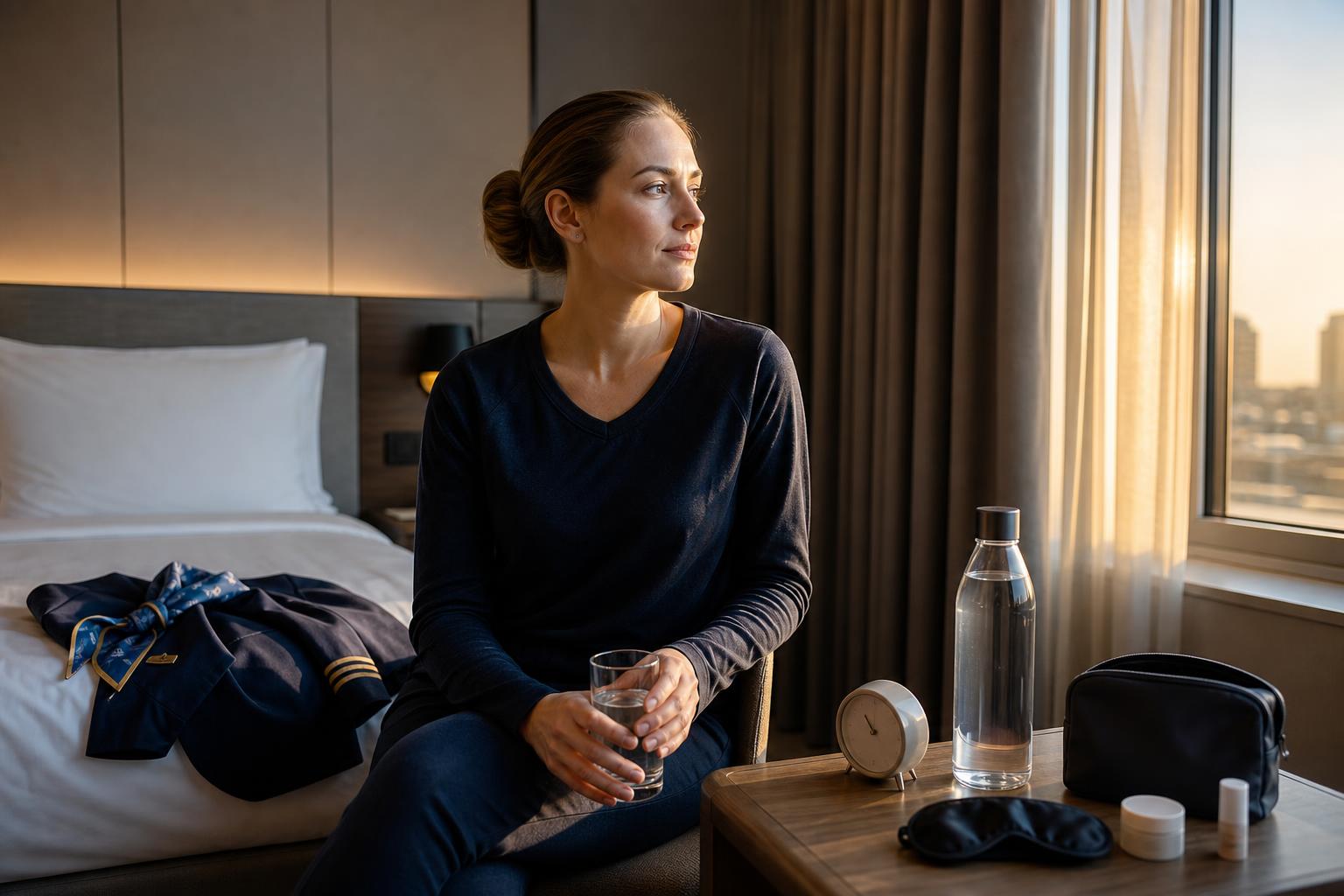
Staying healthy as a flight attendant is less about having a perfect wellness routine and more about building one that survives real crew life. Early reports, dry cabin air, long duty days, hotel rooms, commuting, and irregular meals can wear you down fast if your habits only work in ideal conditions.
This guide is for current and aspiring cabin crew who want a realistic approach to health on the job. Instead of treating wellness like another impossible checklist, the goal is to build portable routines around sleep, hydration, food, movement, skincare, and recovery that still hold up when the schedule gets messy.
If you want the bigger crew-life context first, start with the flight attendant lifestyle guide. That page explains how health fits into the wider reality of sleep, money, relationships, and recovery. This article focuses on the practical health layer itself.
Why Staying Healthy Feels Harder in Crew Life
Cabin crew work challenges health in several directions at once. Fatigue changes your food choices. Dry air affects hydration and skin. Time-zone shifts can reduce sleep quality. Hotel rooms can disrupt your routine. Even a good schedule can become physically draining if your shoes, meals, and recovery habits are working against you.
- Sleep pressure: irregular report times make consistency harder.
- Dry cabin environment: dehydration and skin stress build up faster than many new crew expect.
- Long periods on your feet: small footwear and circulation problems turn into big fatigue problems over time.
- Reactive eating: airports, delays, and short turns make convenience food the default unless you plan ahead.
- Low-friction routines: when your system is too complicated, you stop using it on tired days.
That is why the healthiest crew routines are usually simple, repeatable, and portable rather than ambitious. The question is not whether a routine looks impressive on paper. The question is whether it still works after a delayed arrival and a short overnight.
1. Protect Sleep Like a Health Habit, Not a Luxury
Sleep does more for crew health than almost any single supplement, gadget, or productivity hack. It affects mood, recovery, cravings, skin, patience, workout motivation, and how hard the next duty day feels. When sleep gets ignored for too long, the rest of the routine usually starts falling apart.
For many crew, the best move is not chasing perfect sleep every trip. It is protecting the best available sleep window and removing enough friction that rest happens faster when the chance is there. If fatigue is already your main weak point, pair this guide with how flight attendants manage jet lag.
- Darken the room quickly with blackout curtains, an eye mask, or both.
- Cool the room enough that your body can downshift after duty.
- Set one realistic recovery priority on short layovers instead of trying to do everything.
- Reduce late-night screen time when you already know the sleep window will be short.
2. Treat Hydration as Daily Maintenance
Most flight attendants know they should drink more water, but hydration matters because it supports several other systems at once. It helps reduce headaches, dry-mouth discomfort, sluggishness, and the general heavy feeling that makes every duty day harder.
A practical hydration routine does not need to be complicated:
- start each duty day with water before the caffeine cycle fully begins
- carry a bottle you will actually refill instead of relying on good intentions
- drink steadily through the day instead of trying to catch up all at once
- be more intentional with alcohol on short layovers if sleep quality matters more than downtime
Hydration also supports recovery in dry hotel and cabin environments, which is one reason it connects so naturally to flight attendant skincare routines that hold up on dry duty days.
3. Keep Food Portable and Predictable
Healthy eating usually fails in aviation work when every meal decision becomes reactive. By the time you are exhausted, delayed, or stuck between transport windows, the easiest option wins. That is why food prep matters less as a perfection habit and more as a fatigue-reduction habit.
Instead of trying to meal-prep like a fitness influencer, think in simple crew-friendly layers:
- one or two reliable trip meals you can repeat without thinking too much
- protein-forward snacks that travel well and do not fall apart in your bag
- backup options for report delays, long sits, and airport price traps
- a routine that keeps you from waiting until you are starving to decide what to eat
If this is where your routine usually breaks down, meal prep gear that actually makes trip food easier can lower the friction without turning your whole life into food prep.
4. Build Movement Into the Day Without Overcomplicating It
Staying healthy as a flight attendant does not always mean finding time for full workouts during every trip. On many rosters, that expectation is unrealistic. Movement matters more when it stays frequent and low-friction: walking, stretching, circulation support, and a few easy hotel-room resets that keep your body from stiffening up between sectors.
Focus on what helps most consistently:
- walk whenever the layover and safety context make it easy
- use short mobility sessions instead of waiting for a perfect workout block
- stretch calves, hips, chest, and upper back after long duty days
- prioritize gear that makes long periods on your feet easier instead of tougher
That last point matters. Crew who ignore the physical basics often feel the cost in their feet and legs first. If long-duty recovery is becoming harder, revisit compression socks that actually help on long duty days and shoes that hold up on duty days.
5. Protect Skin and Dry-Air Recovery
Cabin air, hotel air conditioning, makeup wear, and disrupted sleep can all show up on your skin fast. A good routine does not need ten steps. It needs to be easy enough that you will still do it when you get back to the room tired.
A sustainable crew skincare setup usually includes:
- a gentle cleanser that does not leave skin tighter than before
- a simple moisturizer that works in both cabin and hotel environments
- lip care and hand care because those often show dryness first
- sunscreen discipline when layovers involve daytime walking or sightseeing
If you want product-specific direction, the strongest companion page here is best skincare products for flight attendants. This health guide is about the repeatable habit, not the shopping list alone.
6. Make Recovery Easier in Hotel Rooms
Hotel rooms can either support your health routine or quietly sabotage it. The more automatic your hotel setup becomes, the easier it is to recover on short turnarounds.
Good layover health habits often look surprisingly basic:
- set out what you need for sleep before you get distracted
- drink water when you enter the room instead of after you crash
- remove makeup, shower, and cool down physically as early as possible
- keep snacks or a simple meal available so hunger does not push you back out unnecessarily
- protect both safety and rest with a calmer room routine
That last point matters because feeling secure makes it easier to sleep well. For that layer, pair this guide with hotel safety tips for cabin crew.
7. Avoid the All-or-Nothing Health Trap
One of the biggest mistakes new crew make is assuming health only counts if the routine is perfect. Then one broken sleep block, airport meal, or missed workout makes the whole system feel lost. Crew life works better when you think in partial wins.
| Health Area | All-or-Nothing Thinking | Portable Crew Version |
|---|---|---|
| Sleep | If I cannot sleep eight perfect hours, the night is ruined | Protect the best rest window available and improve the room setup |
| Food | If I eat one airport meal, the whole trip is unhealthy | Stabilize the next meal and keep better backup snacks ready |
| Movement | If I cannot do a full workout, there is no point moving | Walk, stretch, and reset circulation in short blocks |
| Skincare | If I skip the full routine once, it does not matter | Keep the shortest version easy enough to repeat every time |
| Recovery | If the layover is short, I should still maximize every activity | Choose the one thing that helps tomorrow most |
This mindset shift is often what makes a crew routine sustainable. You do not need to do everything. You need to keep the basics alive often enough that your body is not constantly paying the price.
8. Use Your Packing System to Support Your Health
Health routines are easier when your bag already supports them. A missing eye mask, no backup snack, wrong shoes, or forgotten skincare basics can turn a manageable trip into a draining one for no good reason.
That is why health should not be separated from packing. Your strongest supporting pages here are the full flight attendant packing list, the training packing list, and the essentials guide. Packing is part of health because it reduces decision fatigue later.
FAQ: how to stay healthy as a flight attendant
How do flight attendants stay healthy with irregular schedules?
Most do better when they simplify the basics: protect sleep when possible, stay hydrated, keep food portable, build in short movement sessions, and make hotel recovery routines easy to repeat.
What is the hardest part of staying healthy as cabin crew?
For many crew, the hardest part is inconsistency. Sleep, meals, and recovery windows change so often that routines have to be portable instead of rigid.
Do flight attendants have time to work out regularly?
Sometimes, but not always. On many schedules, walking, stretching, circulation support, and short hotel-room movement sessions are more realistic than expecting full workouts every trip.
What should new flight attendants focus on first?
Start with sleep, hydration, simple food prep, and footwear. Those habits usually improve the biggest day-to-day health problems fastest.
Final Thoughts
The healthiest flight attendant routine is usually the one you can still follow when you are tired, delayed, and working around a real roster. Big plans matter less than repeatable basics. When your sleep, hydration, food, movement, and recovery habits support each other, the job feels less punishing and more sustainable.
For the strongest next step, pair this page with the flight attendant lifestyle guide, jet lag recovery guide, and flight attendant essentials so your health routine fits the wider reality of crew life instead of fighting it.