




The best shoes for flight attendants are not always the most stylish pair on the shelf or the most expensive pair in a travel roundup. They are the shoes that still feel dependable after early sign-ins, long terminal walks, repeated galley movement, hotel transfers, and the final trip home. Good crew shoes reduce fatigue, protect posture, and help a workday feel more controlled.
That matters because cabin crew do not wear shoes for one short commute and a seated office day. They spend hours standing, walking, turning quickly in tight spaces, pushing through airports, and switching between aircraft, crew transport, and hotels. A pair that looks polished for one hour can become a problem by the end of the first real trip if the sole is slippery, the support collapses, or the toe box starts fighting your feet.
This guide focuses on what actually makes shoes work for flight attendant life. If you are building a more complete setup, pair this with our guides to flight attendant essentials, a repeatable flight attendant packing list, travel accessories flight attendants actually use, the best luggage for flight attendants, and best compression socks for flight attendants.
What flight attendants actually need from a good shoe
The best shoes for flight attendants usually do five things well:
- Stay comfortable through long standing and walking periods.
- Provide stable grip on polished floors, jet bridges, and fast transitions.
- Look professional enough to fit airline appearance expectations.
- Hold up under frequent wear instead of breaking down after a few trips.
- Work with swelling, heat, and pressure changes better than rigid fashion-first shoes.
If a shoe fails one of those tests, the problem repeats every duty cycle. That is why the best choice is usually the pair that supports your routine consistently, not the pair that only looks sharp in product photos.
The best shoe categories for most flight attendants
1. Supportive black work flats or loafers
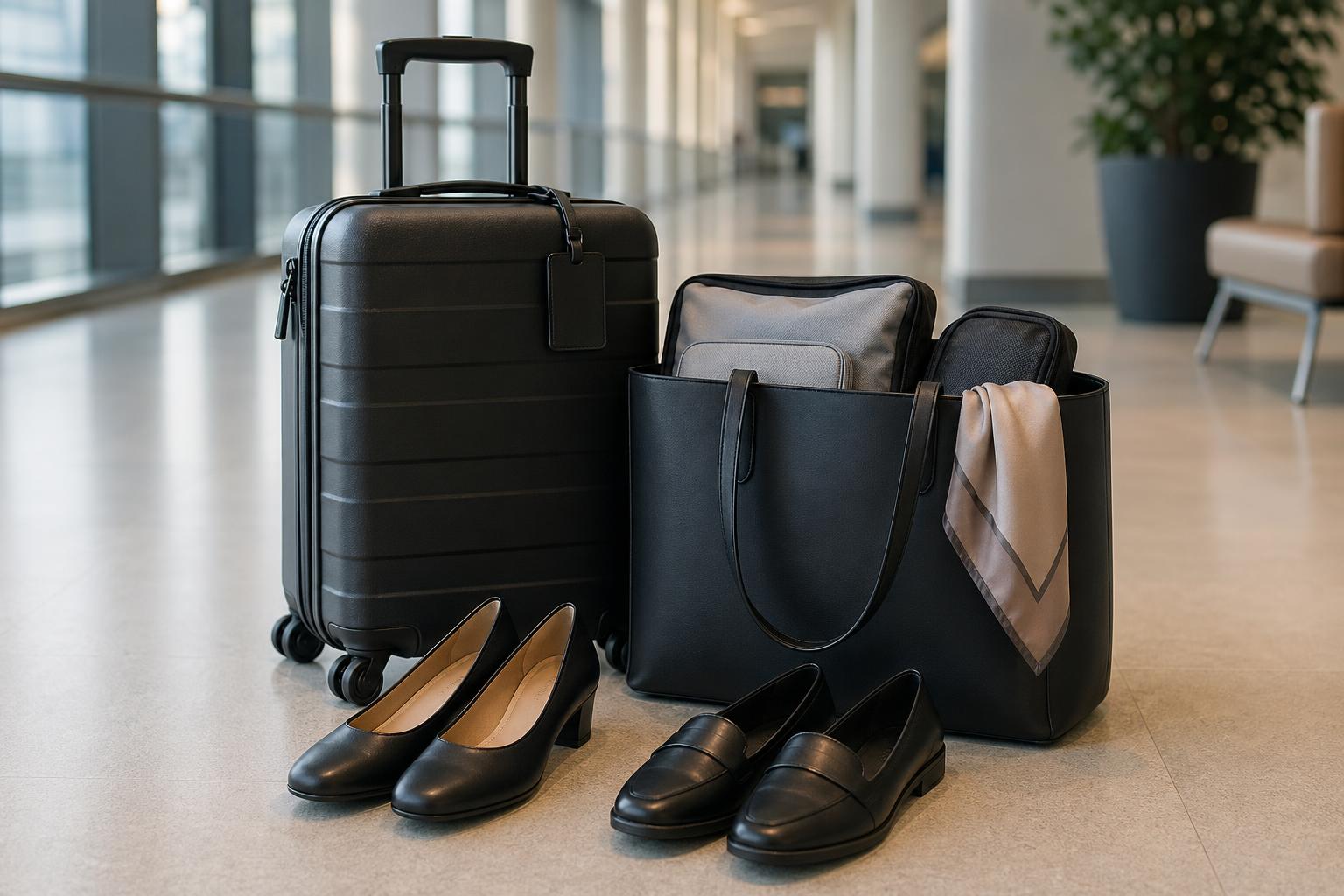
For many flight attendants, a supportive flat or loafer is the most practical starting point. This category works well because it keeps the look professional while giving more day-long usability than rigid dress shoes with minimal padding. The strongest versions have cushioned insoles, a secure heel fit, a slightly flexible forefoot, and enough structure that the foot does not feel sloppy after hours of movement.
These are often the best everyday cabin shoes when airline grooming rules are conservative and you need one dependable pair that can handle most trips.
2. Low block-heel shoes with real stability
Some airlines or personal style preferences still make a small heel relevant, but the keyword is stability. A low block heel usually performs better than a narrow or decorative heel because it distributes pressure more evenly and feels less risky during fast turns, boarding movement, and long airport walks. If the shoe forces a shortened stride or creates forefoot pressure quickly, it is probably not the right crew shoe no matter how polished it looks.
3. Walking shoes or sneakers for commuting and layovers
The best shoes for flight attendants are not always one pair. A practical crew setup often includes an on-duty shoe and a second pair for commuting, airport repositioning, or off-duty walking. A clean walking shoe or supportive sneaker helps protect feet outside uniform hours, especially when a trip includes large airports or long layover city walking.
This is also why shoe planning belongs inside a full crew system rather than as a random last-minute purchase. Your work shoes, hotel shoes, and bag setup all affect each other.
4. Lightweight recovery shoes for the hotel
Recovery matters more than many people expect. After a long duty day, many crew members want a lightweight pair for the hotel that gives the feet a break from structured work shoes. That does not need to be fancy. It just needs to be compact, easy to pack, and genuinely more comfortable than staying in your duty shoes for another few hours.
What makes a flight attendant shoe comfortable enough for real use
Cushioning that does not flatten immediately
Soft does not always mean supportive, but completely flat insoles usually become a problem fast. A good flight attendant shoe should absorb impact while keeping the foot stable. If the insole feels good for five minutes and dead by the end of a test walk, it is unlikely to hold up over repeated duty days.
Enough toe room for long wear
Feet can swell during long days and travel. Shoes that feel barely acceptable in a quick fitting session often become painful later. A slightly more forgiving toe box usually beats a sharp tapered shape that creates pressure over time.
Grip that feels trustworthy
Outsole grip matters. Cabin crew move across smooth airport floors, aircraft surfaces, hotel entrances, and sometimes wet transitions outside. A shoe that slides too easily creates constant low-level tension even when you do not fully notice it at first.
Secure fit without constant adjustment
The best shoes for flight attendants should stay in place without pinching. If you have to keep correcting the heel, tightening the strap, or changing the way you walk to keep the shoe on, that pair is adding friction to the job instead of reducing it.
Materials that can handle repeated wear
Durability is not only about how the shoe looks on day one. It is about how it responds to scuffs, repeated walking, pressure at the toe crease, and the strain of being packed, unpacked, and reworn quickly. Flight attendant shoes need to survive rhythm, not just occasional use.
How to build a practical crew shoe rotation
For many cabin crew, the smartest answer is not finding one magical shoe for every context. It is building a simple rotation:
- one primary duty shoe that looks professional and stays comfortable
- one backup or alternate duty pair in case of wet weather, break-in issues, or faster-than-expected wear
- one off-duty walking or recovery pair for layovers and hotel time
That rotation reduces stress because it gives you options without turning packing into chaos. If you are refining the rest of your setup too, our guide to what cabin crew actually pack for work and layovers pairs naturally with this decision.
What to avoid when choosing shoes for flight attendant work
- Very stiff soles: they often feel polished but can become exhausting after hours of movement.
- Fashion-first narrow toe shapes: they may look sleek but often create avoidable pressure.
- Slippery outsoles: low grip is a real operational annoyance, not a minor detail.
- Heavy shoes: extra weight gets more noticeable as the day goes on.
- Pairs that need constant break-in hope: if the shoe feels wrong from the start, it usually does not become the reliable crew favorite you wanted.
Are shoes a good gift for flight attendants?
Shoes can be a thoughtful gift, but only when the giver understands sizing, airline appearance rules, and the recipient’s comfort preferences. In many cases, shoe-related gifts work better when they support the category instead of trying to guess the exact pair. Insoles, quality socks, compact recovery footwear, or a contribution toward a known favorite model can be easier wins.
If you are thinking more broadly about practical crew gifts, our guide to best gifts for flight attendants is the better starting point.
Final take
The best shoes for flight attendants are the ones that still feel stable, comfortable, and professional after a real day of crew movement. That usually means choosing for support, grip, durability, and fit before choosing for image alone. A strong pair of shoes does not just complete the uniform. It protects energy, posture, and consistency across repeated trips.
When the shoe decision fits the rest of your setup, everything works better together. For the bigger system, continue with flight attendant essentials, travel accessories flight attendants actually use, and the best luggage for flight attendants.
Frequently asked questions
What kind of shoes do flight attendants usually wear for work?
Most flight attendants rely on professional black flats, loafers, or low stable heels that meet airline appearance standards while staying wearable for long shifts.
Are flats better than heels for flight attendants?
For many crew members, yes. Supportive flats or loafers are usually easier on the feet and more practical for long movement-heavy days, though some airlines or individuals still prefer a low block heel.
How many pairs of shoes should a flight attendant pack?
Many crew members do best with a simple rotation: one main duty shoe, one backup or alternate pair when needed, and one off-duty recovery or walking pair for layovers.
What matters more: style or support?
Support should win first. The best crew shoe still needs to look professional, but if it cannot handle hours of walking and standing comfortably, it is not the right long-term choice.