




The best meal prep gear for flight attendants is not the gear that looks impressive on a kitchen counter. It is the gear that travels well, keeps food safe long enough to be practical, and makes it easier to avoid last-minute airport food during duty days, reserve stretches, and short layovers. Cabin crew routines change constantly, so the strongest meal prep setup is compact, washable, and realistic for repeated trips.
That matters because food friction adds up quickly in crew life. A leaking container can ruin a tote. A bulky lunch bag gets cut from the packing system after one annoying trip. Gear that takes too long to clean usually stops being used. The goal is not to pack a perfect wellness fantasy. The goal is to make work food easier often enough that the habit actually sticks.
This guide focuses on meal prep gear flight attendants can realistically keep in rotation, from containers and cooler systems to utensils, bottles, and small prep helpers. If you are building a broader work-bag system, pair this with our guides to flight attendant essentials, a repeatable flight attendant packing list, best travel tech for flight attendants, best skincare products for flight attendants, and best compression socks for flight attendants.
What makes meal prep gear worth carrying for cabin crew
Meal prep gear has to survive more than a normal commute. It gets moved through crew rooms, airports, transport, hotel fridges, and quick turnarounds between trips. The best pieces usually share five traits.
- Leak resistance: If one container failure ruins a bag, that item usually does not get another chance.
- Compact shape: Square or stackable pieces are easier to fit around shoes, tech, and uniform extras.
- Easy cleaning: Crew routines do not always leave time for high-maintenance lids and awkward corners.
- Temperature support: Insulation, ice-pack compatibility, or short-term food protection matter more than style.
- Repeatable usefulness: The best gear works on early reports, long sits, reserve days, and overnight trips.
That is why the strongest meal prep setup is usually simple. A few dependable pieces outperform a large collection of accessories that never quite make it into the bag.
Best meal prep gear categories for flight attendants
1. Leakproof meal containers
A solid food container is the foundation of the whole system. For flight attendants, the most useful containers are secure enough for soups, sauces, yogurt, rice bowls, chopped fruit, or overnight oats without turning the tote into a gamble. Flat rectangular shapes usually beat wide round bowls because they stack more cleanly in a cooler bag.
The real test is whether the container still feels worth carrying after several back-to-back trips. If it leaks, stains too easily, or takes too much effort to wash in a hotel sink, it will probably get dropped from the rotation.
2. Insulated lunch bag that fits a real crew tote
An insulated bag matters because cabin crew schedules do not always line up with predictable meal timing. A good lunch bag helps protect food through airports, transport, report time, and delayed breaks without becoming one more bulky piece of luggage. Slim structured lunch bags usually work better than oversized family-style coolers.
The best option is the one that fits your actual crew bag system. If it forces awkward repacking every trip, it stops being practical no matter how well insulated it is.
3. Reusable ice packs or compact cooling inserts
Ice packs are one of the simplest upgrades for anyone bringing protein, dairy, chopped fruit, or full meals. They help the lunch system stay usable longer and reduce the temptation to abandon packed food halfway through the day. Slim packs usually work best because they cool without eating too much space.
4. Small divided containers for snacks and components
Not every duty day calls for one large meal container. Sometimes the most realistic approach is several smaller portions: nuts, fruit, cut vegetables, wraps, rice cakes, cheese, or sauces packed separately. Small divided containers help keep food from turning soggy and make snack-based eating more manageable on irregular schedules.
5. Durable water bottle that is easy to refill
Hydration is part of the food system whether you think of it that way or not. A dependable bottle reduces repeated purchases, makes it easier to keep routine hydration habits, and supports long duty days when dry cabin air and busy service flows make it easy to fall behind. The best bottle is usually the one that seals well, fits in your bag, and is easy to clean.
If hydration and recovery are the bigger issue on your trips, our guide to how flight attendants manage jet lag covers the sleep and fatigue side of the same routine problem.
6. Travel cutlery set and napkin pouch
This is a small item, but it prevents a surprising amount of friction. Having a compact fork, spoon, or chopsticks set means your packed food stays usable even when airport pickup options are limited or hotel-room supplies are inconsistent. A small zip pouch for utensils and napkins keeps the system cleaner and easier to reset.
7. Compact thermos or insulated food jar
For some flight attendants, warm meals make the system easier to sustain. A compact food jar can work well for soups, oatmeal, rice, pasta, or leftovers when cold meals get repetitive. The key is keeping the jar small enough that it still feels worth the space it takes up.
8. Prep-friendly tote pouches or bag organizers
Meal prep does not only fail because of the food itself. It often fails because the bag has no clean structure. Small pouches for utensils, wipes, tea bags, protein packets, and backup snacks make the routine more durable. When the food system is easy to repack, it is much more likely to survive real crew life.
How flight attendants should build a realistic meal prep kit
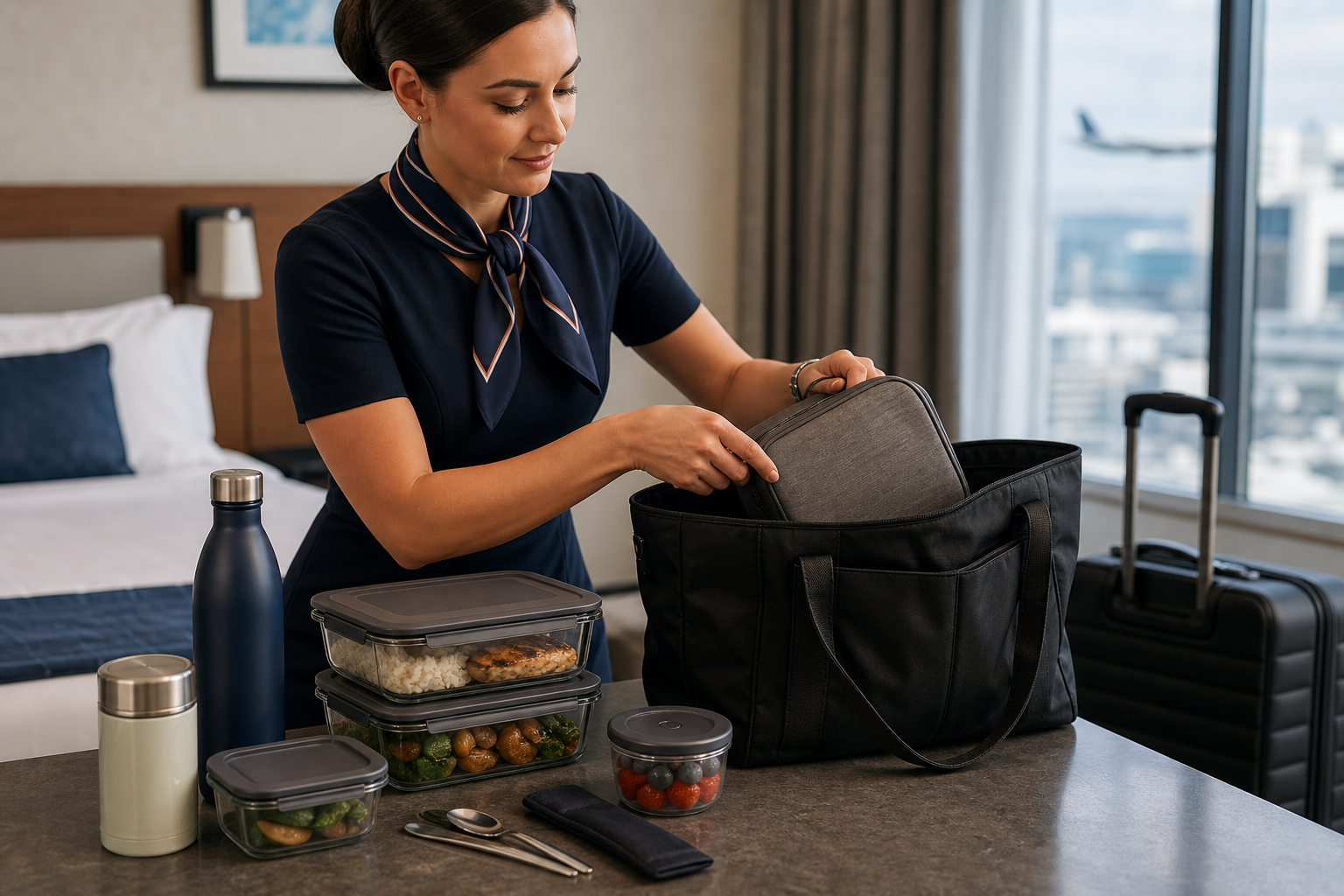
The strongest setup usually starts with one reliable main container, one snack container, one insulated bag, one cooling layer, and one hydration solution. That gives enough structure to support most trips without making meal prep feel like a second job.
A practical starter kit often looks like this:
- one leakproof main meal container
- one or two smaller snack containers
- one insulated lunch bag
- one slim reusable ice pack
- one durable water bottle
- one compact utensil pouch
From there, add only what solves a real repeat problem. If warm food keeps you on track, add a small thermos. If snacks are always crushed or mixed together, add a divided snack box. If your biggest problem is bag clutter, improve pouches before buying more containers.
That same logic works across the rest of your packing system. Our flight attendant packing list helps turn meal-prep gear into a repeatable trip routine instead of a one-off ideal.
Meal prep mistakes flight attendants should avoid
- Choosing containers that are too bulky: if the lunch setup crowds out the rest of the bag, it rarely lasts.
- Ignoring leak protection: one bad spill is often enough to end the habit.
- Packing food that depends on perfect timing: simple meals usually survive irregular schedules better than delicate ones.
- Buying too many specialty gadgets: most crew need a durable base system, not a kitchen drawer of single-use tools.
- Skipping cleanup logic: if the setup is annoying to wash or reset, consistency drops fast.
Best meal prep gear by use case
For long duty days
Prioritize one secure meal container, one cooling layer, hydration support, and enough snack structure to avoid relying entirely on terminal food.
For reserve days and standby time
Prioritize flexible snack containers, a dependable bottle, and gear that works even if you end up eating at odd times.
For multi-day trips
Prioritize compact stacking containers, an insulated bag that repacks easily, and pouches that keep food-adjacent items organized around the rest of your layover gear.
For wellness-focused routines
Prioritize hydration tools, cooling support, and containers that make it easier to bring balanced meals instead of depending on whatever is easiest in the moment. This often pairs naturally with skincare support and recovery gear, because crew wellness habits usually work best as one system.
How this page fits the broader flight attendant gear system
Meal prep gear works best when it supports the same broader goal as the rest of your work setup: less friction, less waste, and more control over a schedule that changes constantly. That is why it belongs beside daily-use pages such as flight attendant essentials, travel tech, and travel accessories flight attendants actually use.
The strongest routines are rarely built from one perfect purchase. They come from small pieces that keep working together trip after trip.
How meal prep connects to recovery and layover planning
Meal prep gear is strongest when it supports the rest of a flight attendant recovery system. A lunch bag is not only about saving money at the airport. It can also make it easier to manage hydration, energy dips, hotel-room routines, and the small decisions that pile up after a delayed duty day.
For wellness-focused trips, connect your food setup with flight attendant health routines, jet lag recovery habits, and simple hotel-room reset choices. If you are packing food for a city-heavy pairing, plan it beside practical layover guidance such as Singapore layover ideas for cabin crew or Tokyo layover planning for flight attendants, where timing, transport, humidity, and fatigue can change what is realistic to carry.
Food storage also belongs in the same practical checklist as hotel safety for cabin crew. Crew do not need an overbuilt kitchen kit, but they do need a routine that keeps containers clean, separates food from uniform items, and makes it easy to reset the bag before the next report time.
Flight Attendant Meal Prep Gear FAQ
What meal prep gear do flight attendants actually need?
Most flight attendants only need a reliable main container, a smaller snack container, an insulated lunch bag, a cooling layer, a refillable bottle, and a basic utensil set. The best setup is simple enough to use repeatedly and compact enough to fit beside the rest of a crew packing system.
Are glass or plastic containers better for flight attendants?
It depends on priorities. Glass can feel sturdier for certain foods, while lighter containers are easier to carry through airports and hotel transfers. For most crew, the better choice is the one that stays leakproof, packs efficiently, and does not make the bag too heavy.
Is an insulated lunch bag worth it for cabin crew?
Usually yes. An insulated lunch bag makes packed food more practical across report times, airport transitions, and delayed meal breaks, especially when paired with a slim cooling insert. The key is choosing one that fits your real crew tote instead of treating it like separate luggage.
What food setup works best for irregular schedules?
A mix of one flexible main meal plus several durable snacks usually works better than a rigid plan built around one exact break time. Crew schedules change quickly, so food that can be eaten in smaller windows is often more useful than a perfect meal that depends on perfect timing.
How should flight attendants keep meal prep gear clean during trips?
Keep the setup simple enough to rinse, wipe, and repack in a hotel room. Smooth containers, removable seals, a small utensil pouch, and separate storage for food-adjacent items help keep the system hygienic without turning cleanup into another high-maintenance routine.
Final takeaway
The best meal prep gear for flight attendants makes packed food easier to carry, easier to trust, and easier to repeat. If the setup protects food, fits your bag, and reduces daily friction, it is doing its job. If it creates clutter or cleanup stress, it probably will not stay in rotation.
To build the rest of the system around it, continue with flight attendant essentials, flight attendant packing list, best travel tech for flight attendants, and travel accessories flight attendants actually use.