





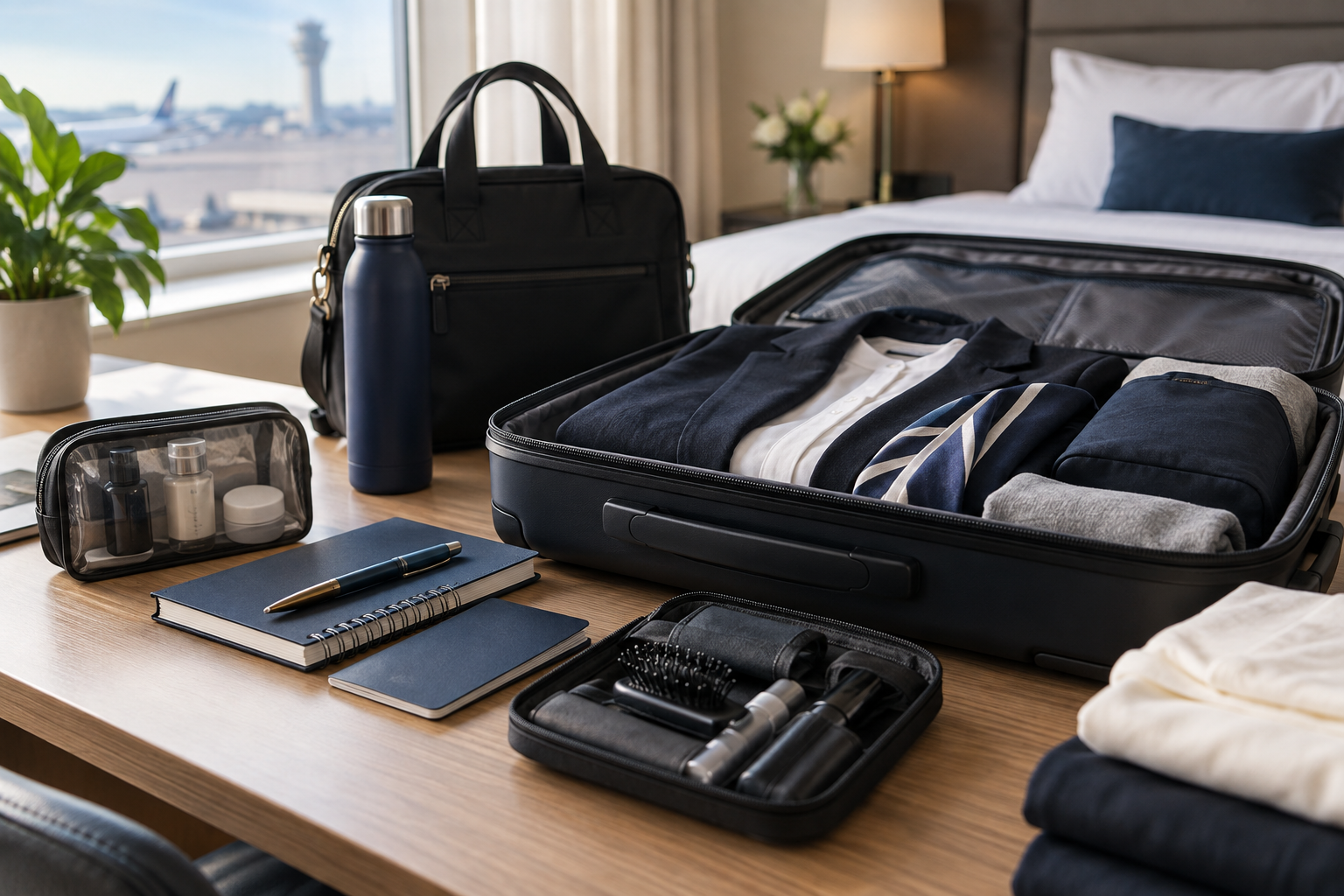
A flight attendant training packing list needs a different logic than a normal crew layover bag. Training is part classroom, part grooming check, part compliance exercise, and part stamina test. You are not just packing for comfort. You are packing to stay organized, presentable, alert, and ready for long days where small mistakes can create avoidable stress.
This guide covers what to bring to flight attendant training, what usually matters most during the first weeks, and what to leave behind so your bags stay practical instead of overloaded. If you are still mapping the bigger career path, start with how to become a flight attendant, then review the most common flight attendant interview questions before you get to the training stage.
Flight Attendant Training Packing Checklist
Use this quick checklist before you close your suitcase. It keeps the page-one question simple: what do you actually need for flight attendant training, and which items belong in a normal work bag later?
| Pack category | Bring first | Why it matters during training |
|---|---|---|
| Documents | ID, passport, offer letter, onboarding forms, hotel details | Missing paperwork can slow check-in, badging, payroll, or training access. |
| Uniform and grooming | Approved attire, compliant shoes, hosiery or socks, hair kit, lint fixes | Training often mirrors airline appearance standards before you start flying. |
| Classroom gear | Notebook, pens, charger, water bottle, simple day bag | Long lessons and drills are easier when basics stay within reach. |
| Toiletries and health | Core toiletries, skincare basics, small medicine pouch, sleep support | Dry rooms, early mornings, and shared housing make recovery items useful. |
| Food and recovery | Snack kit, meal container, electrolytes, laundry bag, comfortable off-duty outfit | These reduce daily friction without turning training luggage into a vacation bag. |
Keep the checklist lean. Pack what helps you stay compliant, study well, sleep enough, and repeat the routine every day.
Flight Attendant Packing Advice for 2026 Training
The best flight attendant packing advice for 2026 is to pack for compliance, study rhythm, and recovery rather than for every possible travel scenario. Training days can move quickly, so your suitcase should make the required parts easy: documents, appearance standards, class materials, food basics, and sleep support.
- Pack documents in one folder so ID checks, onboarding forms, hotel details, and payroll paperwork are easy to find.
- Build one daily training bag with notebook, pens, charger, water, grooming touch-ups, and simple snacks instead of repacking from scratch every morning.
- Keep clothing repeatable with compliant outfits, backup hosiery or socks, and one comfortable off-duty layer for recovery.
- Leave space for airline-issued items because training materials, uniform pieces, and manuals can add bulk after you arrive.
If you are comparing this with a normal flight attendant packing list, treat training as the stricter version: fewer nice-to-have items, more paperwork discipline, and a daily setup that supports learning. If you are still before the training invite, start with the clean path for how to become a flight attendant and the interview questions airlines usually ask.
Why Training Packing Is Different from Regular Trip Packing
Training usually compresses a lot into a short window: classroom sessions, emergency drills, grooming standards, paperwork, hotel or shared-housing logistics, and long days where being underprepared is distracting. The goal is not to pack for every possible scenario. The goal is to show up with a system that protects four things:
- document readiness so nothing important gets misplaced
- uniform and grooming reliability so you can meet standards consistently
- classroom and drill practicality so you can focus on learning instead of scrambling
- sleep, food, and recovery support so you can stay functional across a demanding schedule
If you already have a broad work-bag setup, your normal flight attendant packing list can help. Training, though, deserves its own checklist because the priorities are narrower and more repetitive.
Documents and Admin Items to Pack First
Before you think about outfits or toiletries, lock down the items that can actually disrupt your training if they are missing.
- Government ID and passport. Even if you do not expect to travel internationally during training, airlines often require both for onboarding and record verification.
- Offer letter, onboarding paperwork, and printed confirmations. Keep digital copies too, but do not rely only on your phone.
- Training schedule, contact details, and hotel information. Save them in one place that is easy to reach quickly.
- Notebook or binder for handouts. Training moves fast, and scattered papers create unnecessary friction.
- Pens, highlighters, and simple study supplies. Small basics matter more than aesthetic stationery.
A simple document organizer is often more useful than a bigger bag upgrade. Training tends to punish disorganization long before it rewards overpacking.
Uniform, Grooming, and Appearance Essentials
Training standards often mirror the professionalism airlines expect on the line. Even if you are not in full uniform every day, appearance and readiness still matter.
- Required uniform pieces or approved training attire. Follow the airline instructions exactly instead of guessing.
- Comfortable but compliant shoes. If you have already researched long-day footwear, our guide to best shoes for flight attendants helps frame what practicality looks like.
- Backup hosiery, socks, or underlayers. These are easy to forget and annoying to replace under time pressure.
- Hair-control items. Pins, ties, gel, or other grooming tools should live in one dedicated pouch.
- Small emergency kit for appearance fixes. Think stain remover pen, lint roller sheets, clear nail polish, and a compact sewing fix if you rely on delicate items.
This is also where visible-tattoo and appearance-policy reality starts to matter. If that question still affects your airline options, review can you be a flight attendant with tattoos before assuming training standards will be flexible.
Classroom Gear That Actually Helps During Training
Most trainees do not need elaborate study tools. They need a few reliable items that make long classroom days easier to manage.
- Laptop or tablet only if the airline requires it. Do not bring extra electronics just because they feel productive.
- Phone charger and portable battery. A dead phone during long days can turn simple logistics into a problem.
- Water bottle. Hydration affects concentration more than people expect in training environments.
- Simple snacks that travel well. Protein bars, nuts, or easy backup food can help when breaks are short.
- Lightweight tote or day bag. You want something easy to carry between training room, shuttle, and accommodation.
If your tech setup still feels messy, the strongest add-ons are usually basic rather than flashy. See best travel tech for flight attendants for the kinds of small tools that reduce friction instead of adding clutter.
Toiletries, Skincare, and Health Basics for Long Training Days
Flight attendant training can feel draining even before you start flying. Dry classrooms, stress, shared accommodation, early starts, and constant performance pressure make a compact personal-care system worth packing well.
- Travel-size skincare and hydration basics. Cabin-crew-friendly routines usually stay simple. Our guide to best skincare products for flight attendants covers the practical side.
- Toothbrush, toothpaste, deodorant, and daily grooming items. Keep them ready in one grab-and-go pouch.
- Any personal medication and a small headache or digestion backup kit. Do not wait until a long day goes sideways.
- Lip balm, hand cream, and eye drops if you use them. Small comfort items often earn their space quickly.
- Compression socks or recovery basics for days with prolonged standing or drills. If you are comparing options, start with best compression socks for flight attendants.
Food, Meal Prep, and Recovery Items Worth Bringing
Training often exposes whether your food routine is realistic. Long days and limited break control make consistent meals harder than many new hires expect.
- Reusable water bottle. This is usually a training essential, not a nice-to-have.
- Simple meal container. Useful if you want to avoid buying every meal around the training schedule.
- Basic snack kit. Keep one category of fast backup food instead of packing a whole pantry.
- Electrolyte packets or drink support if you know fatigue hits you hard.
- Small cutlery set if your accommodation or training site setup makes it worthwhile.
If you want a more permanent routine for work and training prep, best meal prep gear for flight attendants is the better next step than randomly buying containers you may not use later.
Hotel or Shared-Housing Items That Reduce Stress
Some airline training programs involve hotel stays or shared housing. You do not need to recreate home. You do need a few things that make sleep and organization easier.
- Sleep support. Eye mask, earplugs, or a small white-noise solution can matter more than extra entertainment gear.
- Laundry bag or separation pouch. Keeps training clothes and used items under control.
- Slides or easy room shoes. Helpful in shared or hotel environments.
- Compact extension cord or outlet solution if allowed. Useful when rooms have awkward plug access.
- One off-duty comfort outfit. Enough for errands or downtime without dragging your whole wardrobe into training.
Training is easier when your room setup supports recovery instead of adding chaos. That same principle shows up later in crew life, especially in pieces like first year as a flight attendant and how flight attendants manage jet lag.
What Not to Bring to Flight Attendant Training
Overpacking is one of the easiest mistakes to make. A training bag gets weaker when it is full of low-value extras.
- Too many outfit variations. Pack for the actual schedule, not an imaginary social calendar.
- Bulky beauty or grooming products you rarely use. Travel-size, repeatable basics are better.
- Multiple backup gadgets. One good charger setup usually beats a pile of accessories.
- Heavy books and “maybe” study materials. Wait until you know what the airline actually gives you.
- Anything that makes your daily reset slower. Training rewards simplicity.
A Simple 3-Part Training Packing System
If you want the easiest way to stay organized, think in three layers instead of one giant suitcase list.
- Documents and classroom layer: ID, papers, notebook, pens, charger, and daily training bag.
- Uniform and grooming layer: training attire, shoes, appearance kit, and backup essentials.
- Recovery and accommodation layer: toiletries, sleep support, meal basics, and a few room-comfort items.
This kind of structure makes it easier to repack, easier to find mistakes, and easier to transition from training life into your normal flight attendant essentials setup once you start flying.
Frequently Asked Questions
What is the best flight attendant packing advice for 2026 training?
Pack in layers: documents first, airline-approved clothing and grooming second, then a compact daily study bag and recovery basics. Avoid bulky extras until you know the training housing, laundry access, and airline-issued materials.
What should I bring to flight attendant training?
Bring your ID and onboarding documents first, then the uniform or dress items the airline requires, classroom basics, toiletries, chargers, simple food support, and a few recovery items for sleep and organization.
How many clothes should I pack for flight attendant training?
That depends on the airline’s dress code, laundry access, and training length, but most trainees should avoid treating training like a vacation. Prioritize repeatable, compliant outfits over variety.
Do I need a laptop for flight attendant training?
Only if the airline asks for one or the program materials clearly require it. Many trainees do fine with a notebook, phone, charger, and simple study setup.
What is the most overlooked item for cabin crew training?
Small organization tools are often the most overlooked: document folders, laundry separation, grooming backups, and a reliable daily bag setup.
What should I pack in my daily training bag?
Your daily training bag should hold documents, a notebook, pens, phone charger, water bottle, simple snacks, grooming touch-ups, and anything the airline specifically asks you to carry each day.
What should I leave out of my training suitcase?
Leave out bulky extras, duplicate toiletries, too many casual outfits, unnecessary electronics, and anything that creates clutter without helping you meet training standards or recover well.
Final Takeaway
The best flight attendant training packing list is calm, practical, and built around performance rather than overpreparation. Pack the items that help you stay compliant, learn effectively, recover properly, and avoid daily friction. Leave the fantasy packing behind.
Once training is done, move from this specialized checklist into the broader systems behind flight attendant packing list and flight attendant essentials. If you are still pre-hire, keep the sequence clean: understand how to become a flight attendant, prepare for interview questions, then pack for training with a system that actually supports the next stage.