




Rome layovers deserve more than a rushed airport dash. Whether you have six hours or a full overnight, the city has crew-friendly options that do not require hauling a roller bag across cobblestones or burning through an entire rest period just figuring out logistics. This guide is built around what actually works when you are on a crew schedule and need to be back at FCO or CIA sharp for your next sector.
What to Do With a Short Rome Layover: 4 to 8 Hours
If your layover is tight, the key is proximity and simplicity. FCO (Leonardo da Vinci) is well connected to central Rome by Leonardo Express train, taking about 32 minutes to Termini central station. Do not try to squeeze the Vatican into a two-hour window — the lines are real and the bag situation is complicated. Instead, pick one strong target and work backward from your report time.
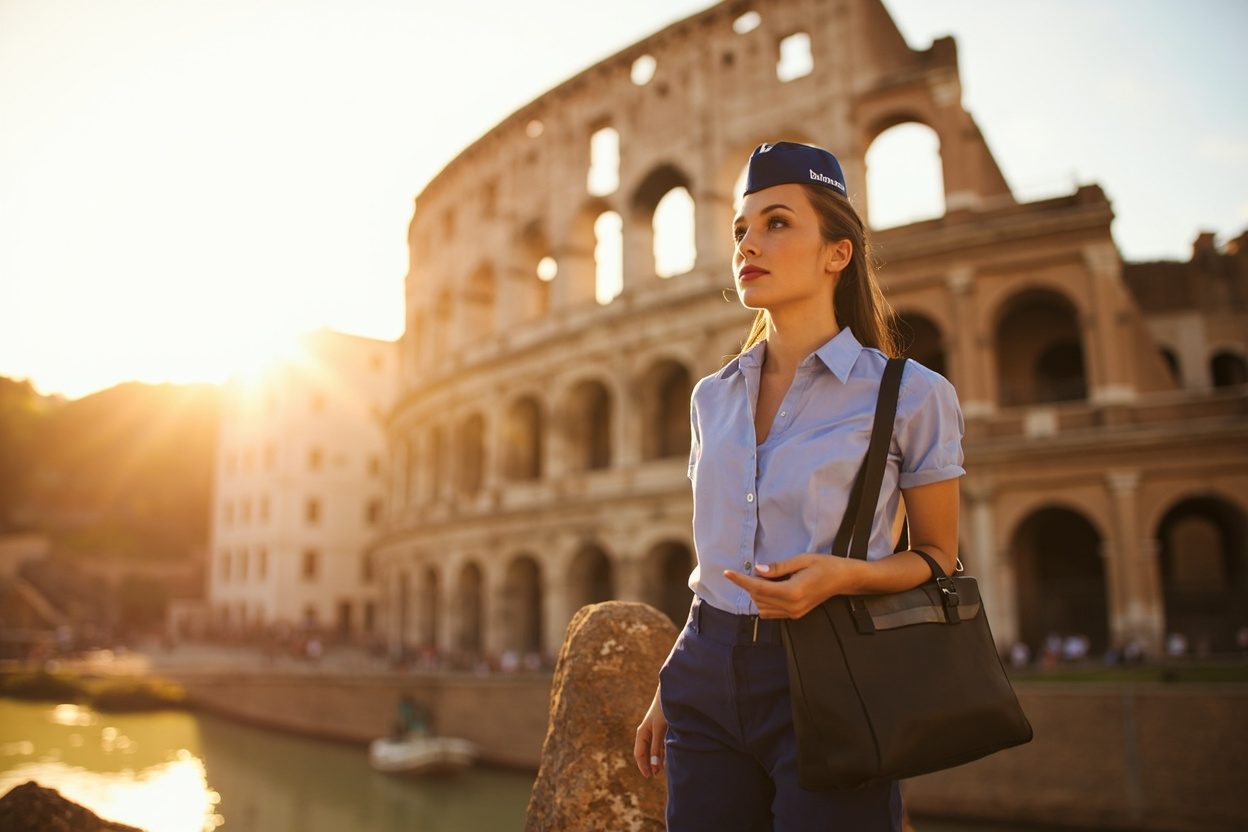
Colosseum and Roman Forum walk — If you are based near Termini, the Colosseum is a single Metro ride away and requires no bag storage if you travel light. You can see the exterior, walk through the Forum area, and be back within two to three hours. It is one of the few high-impact Rome experiences that fits a crew window.
Centro storico stroll — The historic centre between Piazza Navona, the Pantheon, and the Spanish Steps is walkable in about 90 minutes at a normal pace. You can grab a quick sit-down coffee, walk off some jet lag, and head back without committing to a full tourist day. The Pantheon entrance is free and rarely requires more than 10 to 15 minutes of queuing outside peak hours.
Full Rome Layover: 12 to 24 Hours
When you have a proper overnight or a long day-between, Rome reveals more of what makes it special for crew life: good food without rushing, neighbourhoods that actually slow you down, and a few landmarks that are worth the full experience rather than the drive-by version.
Vatican Museums and St Peter’s — The Vatican is worth a serious half-day if you have the energy. Book the early morning entry slot online — it cuts the queue dramatically and gives you a quieter hour inside. The Sistine Chapel ceiling is genuinely one of those things that lands differently in person. Dress code is enforced, so leave the crew uniform or anything above the knee at the hotel. Bag storage is available at the museums but costs extra and fills early.
Trastevere evening — Across the Tiber, Trastevere is the crew neighbourhood for a reason. The narrow streets, outdoor seating, and real Roman pasta are better than any tourist-trap restaurant near Termini. It is especially good on a first evening when you are still adjusting to the time zone. Go around 7pm, grab a table, and let the city do the decompression work for you.
Testaccio food market — If your layover lines up with a morning, the Testaccio market is one of the best food experiences in Rome and genuinely less tourist-saturated than the Campo de’ Fiori market. Fresh pasta, cheese, porchetta sandwiches, and strong espresso — everything you need before a long duty day. It opens early and clears out by early afternoon.
Logistics Every Cabin Crew Member Needs in Rome
Bag storage — Most Roman sights do not have secure bag storage. If you are coming from FCO and want to see the city before checking in somewhere, use StowYourBag or Bounce to reserve a locker near Termini or the centro storico. Hotel bag storage is the next best option if you have an overnight. Do not try to sightsee with a crew roller — Roman cobblestones and narrow Metro passages will change your mind quickly.
Transportation from FCO — The Leonardo Express from FCO to Termini runs every 15 minutes and is the fastest option at 32 minutes. A taxi from FCO to centro storico costs a flat rate of 50 euros and is worth it if you are in a group or arriving late. Do not use unmetered drivers who approach you at the terminal exit — they charge multiples of the flat rate.
Transportation from CIA (Ciampino) — The Terravision bus runs to Termini in about 40 minutes and is the cheapest option at around 6 euros. If you are short on time, a taxi from CIA to centro storico is roughly 30 to 35 euros. Most low-cost carriers land at CIA, so factor in the extra 30 to 40 minutes from Ciampino if you are coming from a short-haul sector.
Uniform considerations — Wearing crew uniform in Rome is generally fine — locals and tourism workers are accustomed to seeing airline crew in the city. However, be mindful that visible crew ID or epaulettes can attract attention from informal vendors and, occasionally, unofficial guides. If you prefer to move without being approached, travel in the crew uniform without the full visible ID set.
Report time buffer — Always build in at least 90 minutes of buffer from centro storico back to FCO for your report time. Roman traffic is unpredictable, and the Leonardo Express is more reliable than a taxi during peak hours. If you are at the Vatican and need to get to FCO, the Metro from Ottaviano to Termini and then the Leonardo Express is the fastest door-to-gate path.
Where to Stay in Rome on a Crew Layover
For a single overnight, the area around Termini is the most practical base even if it is not the most atmospheric. It keeps your transport logistics simple, gives you early-morning check-in flexibility, and means less back-and-forth before a report. The Monti neighbourhood just north of Termini is a better-quality step up while still being walking distance to the station — quieter streets, better restaurants, and still very crew-friendly.
For a longer crew break or standby scenario, Trastevere or the Prati district near the Vatican give you a more authentic Rome experience in a neighbourhood that actually slows you down rather than keeping you in transit mode.
Common Rome Layover Mistakes Flight Attendants Make
Trying to do too much. Rome rewards slower, and crew schedules do not allow for museum marathons. Pick one or two targets and do them well instead of four targets poorly. A half-day in Rome done right beats a full day done at a sprint.
Ignoring the time of day for attractions. The Vatican Museums are dramatically quieter at 3pm than at 10am. The Colosseum is less crowded in the early evening. Use time of day as your planning variable, not just a fixed schedule.
Not booking entry tickets in advance. Rome’s most popular attractions now require timed entry, and walking up often means being turned away. Book the Vatican and Colosseum slots online before your layover — it takes five minutes and removes a whole category of layover stress.
Quick-Reference Rome Crew Summary
| Layover Length | Recommended Area | Top Pick | Transport to FCO |
|---|---|---|---|
| 4 to 6 hours | Termini / Monti | Colosseum exterior walk | Metro + Leonardo Express (35 min) |
| 6 to 10 hours | Centro storico | Pantheon + Spanish Steps + Navona | Metro + Leonardo Express (40 min) |
| 12 to 24 hours | Trastevere / Prati | Vatican + Trastevere evening | Taxi or Metro to Express (45 to 50 min) |
A Rome layover does not need to feel like a logistical failure. The city is forgiving if you plan around your crew window instead of trying to see everything. Pick your energy level, pick one strong target, and build the rest of the layover around that. You will come back to the aircraft in a better state than if you had tried to sprint through five neighbourhoods in a single afternoon.
For more crew lifestyle and layover planning, see the full flight attendant packing list, layover hotel safety guide, and jet lag management tips.