





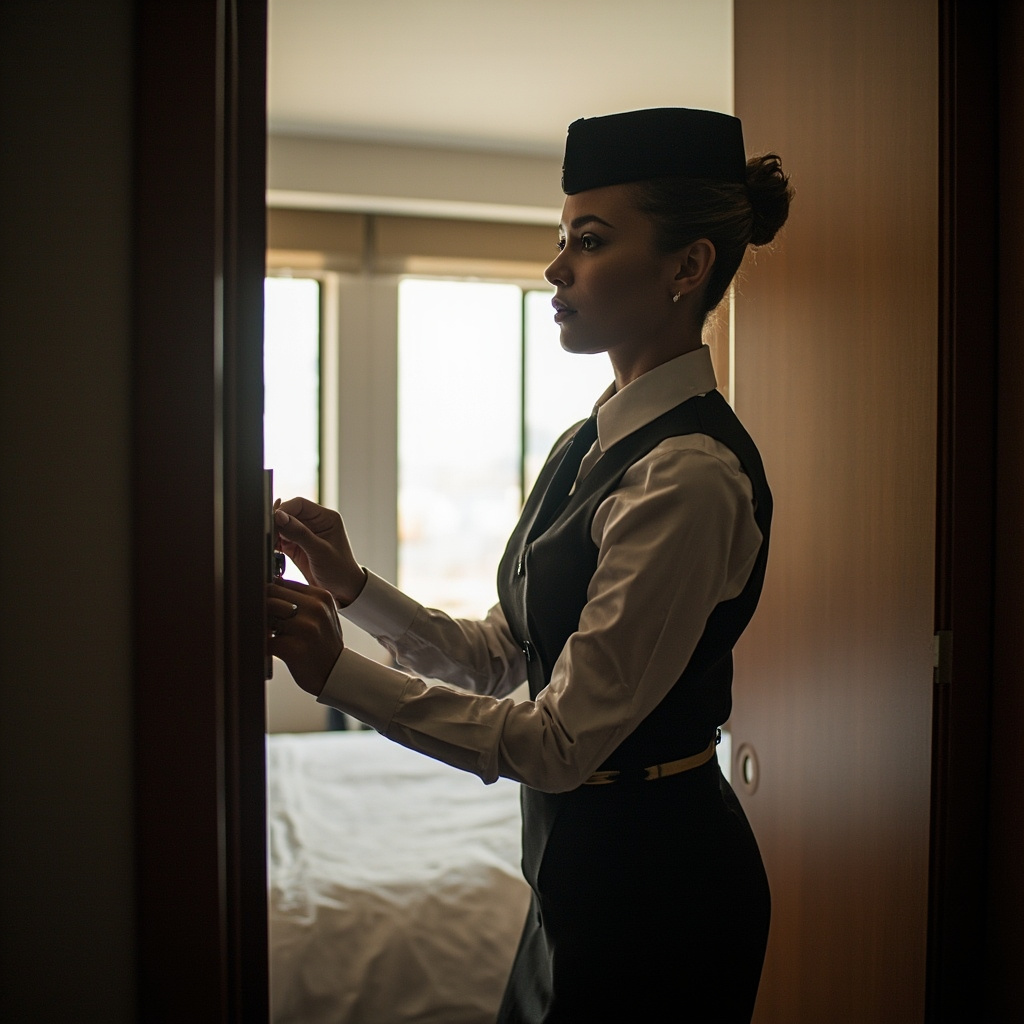
Why Hotel Safety Deserves the Same Attention as Your Pre-Flight Checklist
Cabin crew spend more nights in hotel rooms than they do in their own beds. Between layovers, deadheads, training trips, and commuting to bases they do not live near, a flight attendant’s real home address is often a string of hotel rooms across multiple cities. That pattern creates a specific set of safety realities that the job does not automatically teach you.
Most crew know how to run a security briefing before a flight. Fewer have a practiced hotel safety routine that works across different hotel tiers, countries, and threat profiles. This guide covers the practical things that actually reduce risk on the road, from room selection logic before you book to the small habits that keep your crew credentials and personal items safer once you are checked in.
Room Selection Starts Before You Leave the Lobby
Hotel safety begins at the booking stage. Not all rooms in the same property are equally safe, and the difference between a good room and a problematic one is not always obvious from a third-party listing.
Which Floor Is Actually Safer
Ground floor rooms are historically more accessible from outside, but upper floors are not automatically safer either. The practical concern on higher floors is access via adjacent rooms, balconies, or fire escape stairs. A room between floors 3 and 7 generally balances accessibility with manageable emergency evacuation. For crew who regularly lay over in specific cities, knowing the hotel zones and typical crew accommodation areas helps you book smarter from the start — the London layover guide covers what areas flight attendants typically prefer in that city. Avoid rooms directly above the roof bar or ground-floor lounge if noise and foot traffic are a concern, since those spaces tend to attract more outside visitors.
Location Within the Hotel Building
Rooms near emergency stairwells give you a fast exit option but can also mean more through-traffic and noise. Rooms at the end of a hallway tend to have only one neighboring room, which reduces foot traffic outside your door. If the hotel has a dedicated crew floor or designated crew block, ask for it. Those floors often have better controlled access and housekeeping staff who are accustomed to crew schedules and know not to admit unexpected visitors.
Reading the Property Reviews Before You Book
Look specifically for mentions of unauthorized entry, broken locks, unresponsive front desk, or陌生 visitors being allowed upstairs. A pattern of those reports in the last six months is a stronger signal than a low overall star rating. If a property has recent reports of break-ins or staff not verifying visitors, book elsewhere even if the price is attractive.
Checking In: The First Five Minutes That Matter Most
Your check-in routine sets the tone for the entire stay. A few deliberate habits in the first few minutes at the front desk and in your room catch most problems early.
What to Say at the Front Desk
Use your crew name or a generic reservation name rather than your航空公司 name if your company policy allows. You do not need to announce that you are a flight attendant at a hotel known for crew stays. If asked for a company or employer, a vague answer about working in aviation is sufficient. Request a room away from the elevator bank and on a higher floor if that option is available without extra charge.
The Room Inspection Before You Unpack
Before you unpack anything or set your crew bag down, do a quick walkthrough. Check that the deadbolt and chain latch engage properly. Test the peephole to make sure it is not blocked or tampered with. Confirm the room service door or connecting door to the next room is locked and will not open from the other side. If anything feels wrong, ask for a new room immediately. You do not need to explain why in detail.
Also check that the room has not been recently renovated or still carries construction dust, which is sometimes a sign that an adjacent room is undergoing maintenance access that could involve staff entering your area during your stay.
Lock, Chain, and the Basic Room Defense Stack
Hotels have variable lock quality and most crew have experienced at least one room where the lock did not feel solid. Here is the practical stack that works across most hotel tiers.
The Deadbolt and Chain Check
Always engage the deadbolt, not just the latch lock that works with your key card. The chain latch adds a second layer that is only bypassed if someone forces the door hard enough to damage the frame, which creates enough noise to give you reaction time. Never prop your room door open with a doorstop or leave it cracked for fresh air in a hotel hallway, even for a short trip to get ice.
Using the Locker or Safe Correctly
Most hotels have a room safe or a front desk safe. Use them for your crew ID, passport, company-issued equipment, and any cash you do not need immediately. Do not leave your crew identification unattended in your room during daytime housekeeping cycles. If the safe uses a numeric code rather than a physical key, change the code from any default setting and use something that is not your room number or your employee number.
The Best Practice for Valuables
Airline-issued equipment, crew bags with company materials, and personal electronics are the highest-value items in most crew rooms. A locked safe or a front desk deposit is the baseline. If you are carrying expensive personal items that cannot be left behind, photograph them before you travel and keep a written record of serial numbers in a separate location.
Bathroom and Physical Safety in the Room
Bathroom safety is often the most overlooked part of hotel security routines for crew, because it does not involve the door or locks but it does involve one of the most common injury points in any unfamiliar bathroom.
Wet Floor Accidents and Slip Prevention
Hotel bathroom floors are frequently slick, especially after a long duty day when fatigue makes you move faster. Use the bath mat or a separate towel on the floor before you step out of the shower. If you are staying multiple nights, check that the bathroom floor is dry after each housekeeping service and report any wet flooring that was not addressed. In older properties or tropical locations, check whether the shower drain is working properly to avoid standing water that creates a slipping hazard.
Hotels with Bathtubs vs Walk-In Showers
If you are not a strong swimmer or are uncomfortable with deep water, avoid filling the bathtub higher than mid-chest level. Use the handles or the bath rail if one is installed. For crew who take sleep medication or drink alcohol on a layover, a bath is not a safe choice before bed. Showers are the safer default in an unfamiliar bathroom.
Fire Safety and Emergency Awareness
Hotel fires are rare but crew travel often enough to need a solid fire safety habit for unfamiliar properties.
Finding Your Room’s Fire Exit Before You Sleep
When you arrive in your room, take thirty seconds to locate the fire exit nearest to your room and count the doors between your room and that stairwell. In the event of a fire when you are asleep or disoriented, that mental map could save critical seconds. Keep your room key or key card accessible from the bedside table so you are not searching for it in smoke or darkness.
What to Do If You Smell Smoke
If you smell smoke, get out first and call emergency services from outside the building. Do not assume it is a kitchen fire that will be contained by hotel staff. Use your mobile phone to call the local emergency number rather than relying on the hotel’s internal system. Once you are outside and safe, alert the hotel front desk so they can begin evacuation of other rooms if needed.
Digital and Identity Safety While Traveling
Hotel WiFi is convenient but is also one of the easiest networks to compromise on a travel route. Your crew credentials and company accounts are valuable targets that make flight crew a specific risk vector for credential theft.
VPN and Secure Connection Habits
Use a VPN when accessing company portals, crew scheduling systems, or any site that requires your airline credentials over hotel WiFi. If your airline provides a corporate VPN, activate it before connecting to any network outside your home. Avoid accessing banking or financial accounts over unsecured hotel networks even with a VPN.
Charging Devices Safely in the Room
USB charging ports built into hotel room nightstands or desks are occasionally found to have been modified to extract data from connected devices. Use your own AC adapter and wall outlet for charging rather than built-in USB ports when you have a choice. This is especially relevant for crew who carry company-issued devices or devices that store crew credentials and travel documents. For the tech that actually earns a place in your crew bag, see the guide to best travel tech for flight attendants.
Knowing When and How to Report Safety Concerns
If you experience an attempted entry, suspicious behavior from hotel staff, or anything that makes you feel unsafe in your room, report it to your airline’s crew safety team and document what happened in writing. Most airlines have a crew travel safety contact for exactly these situations. Save that number in your phone before you travel rather than trying to find it during an incident.
For hotels that are repeat crew accommodations on your network, consider reporting recurring problems to your crew scheduling team so they can adjust the recommended hotel block for future crew rotating through the same route. If you are new to crash pad living and hotel safety overlaps with how crew manage their base housing situation, these two topics together give you a fuller picture of crew travel security from the hotel room to your longer-term base setup.
Building a Hotel Safety Routine That Actually Sticks
The most useful habit is treating hotel room safety the same way you treat pre-flight security: a short checklist you run through automatically, not a one-time decision you make at booking. Once you have done it a few times, the room inspection takes under two minutes and catches most problems before they become real issues.
What matters most is consistency. The crew who have the fewest bad hotel experiences are usually not the ones with special training or luck. They are the ones who always check the lock, always store valuables properly, and always know the nearest exit before they sleep in an unfamiliar room. If jet lag and fatigue are part of your regular layover challenge, building a short safety routine alongside your recovery habits keeps both your rest quality and your personal security from degrading on the road.
Pair your hotel safety habit with a solid pre-departure packing checklist so that when you arrive tired after a long day, you have everything you need to stay safe without having to leave the room again immediately.
Frequently Asked Questions
Which hotel floor is actually safest for cabin crew?
Higher floors generally offer better security from ground-level access, but extremely high floors can complicate emergency evacuation. Most experienced crew find the 3rd through 7th floor a practical balance: low enough for easy emergency exit, high enough to avoid ground-level break-in risk. Always check your room’s fire exit location before settling in, regardless of which floor you are on.
Is it worth using the hotel safe for crew credentials and devices?
Yes, when used correctly. The hotel safe is most useful for securing travel documents, backup credit cards, and cash you do not need immediately. Crew IDs and airline credentials are generally safer with you, but a backup copy stored in the safe is a sensible precaution. Keep in mind that hotel safes are not invulnerable, and a determined attacker with the right tools can sometimes breach them. Use the safe as one layer of your overall security stack, not as your sole protection.
Should flight attendants use the deadbolt and chain on their hotel room door?
Always. The deadbolt and chain are the first line of defense after your lock. They take seconds to check and provide meaningful resistance against opportunistic entry. Some experienced crew also carry a small portable door alarm or door wedge as an additional layer, especially when staying in lower-rated properties or in rooms where the lock mechanism feels loose. The brief extra seconds of resistance can be enough to deter an intruder looking for an easier target.
What digital security habits should crew maintain while traveling?
Use a VPN on any network outside your home or airline office, avoid accessing banking or financial accounts over unsecured hotel WiFi even with a VPN, and charge devices from your own AC adapter at a wall outlet rather than built-in USB ports that could theoretically be compromised. If you carry company-issued devices, check whether your airline has a corporate VPN you should activate before connecting to any external network. These habits take seconds to implement and protect both personal and company data.
How can crew build a hotel safety routine that actually sticks?
Treat hotel room safety like pre-flight security: a short checklist you run through automatically rather than a one-time decision at booking. Once you have done it a few times, the full room inspection takes under two minutes and catches most common problems before they become real issues. Consistency matters more than having special training or expensive gear. Check the lock, store valuables properly, note the fire exit, and you will have fewer bad hotel experiences than crew who skip the routine.